Home About Courses Teachers Resources Online Blog Contact
よくある質問

Frequently Asked Questions

Everything you need to know about learning Japanese with Nihongo Language Center.

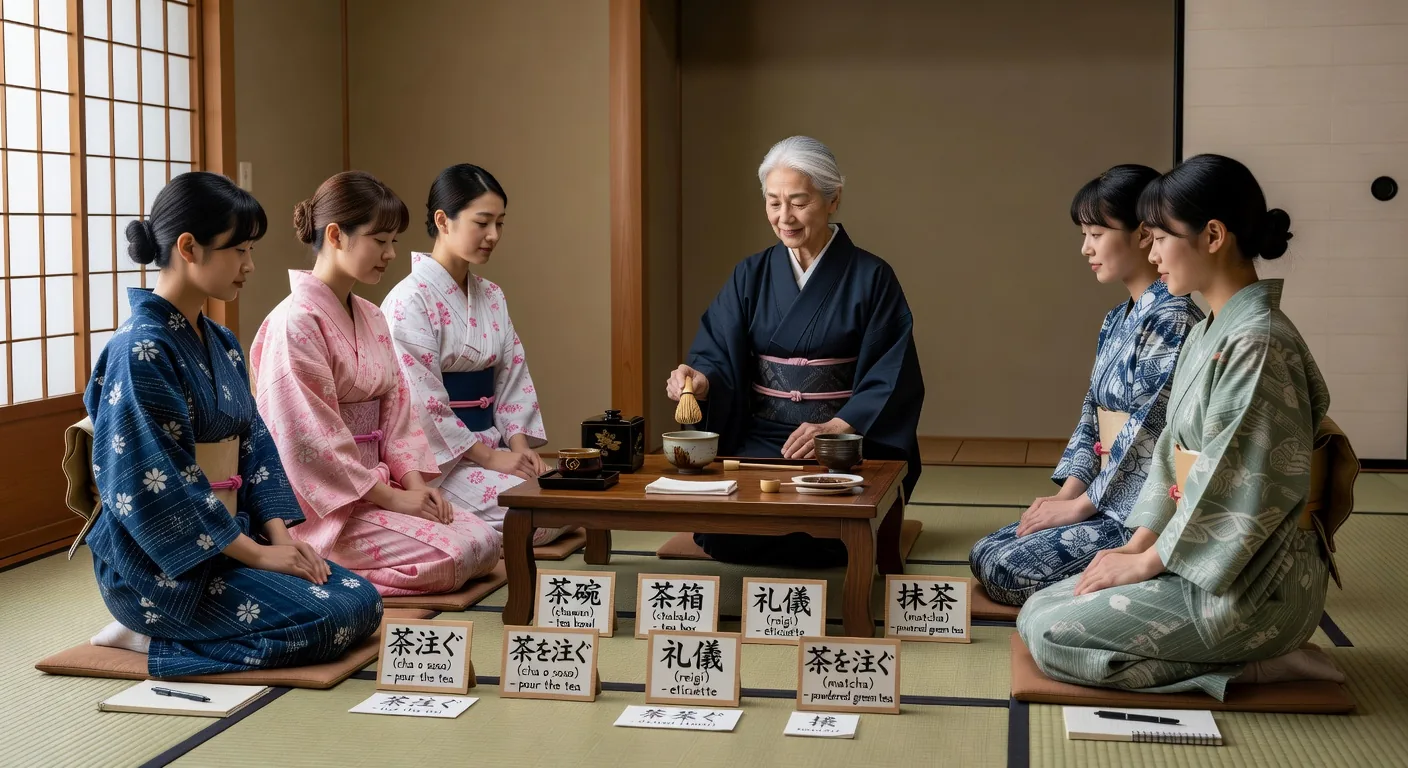
Tea ceremony class
🔍
How long does it take to learn Japanese? +
The time required depends on your goals and starting level. For conversational proficiency at JLPT N5, most students achieve this in 3–4 months of regular study. Reaching N3 (intermediate) typically takes 12–18 months, while achieving N1 (advanced/near-native) can take 2–3 years or more. Consistent practice, immersion, and regular classes significantly accelerate progress. Our teachers will help you set realistic, personalised goals during your placement session.
What makes Nihongo Language Center different from other schools? +
Several key factors set us apart: small class sizes (maximum 4–8 students), ensuring every student receives personal attention; native Japanese teachers with formal teaching qualifications and real-world industry experience; our proven communicative method that focuses on practical use from day one; and our high JLPT pass rates (N5: 98%, N1: 87%). We also offer flexible scheduling and a unique blend of in-person Tokyo instruction and global online classes.
Do I need to know any Japanese before starting? +
Absolutely not. We warmly welcome complete beginners with zero prior knowledge of Japanese. Our Beginner course (JLPT N5) starts from the very beginning — teaching you hiragana, katakana, basic grammar, and everyday vocabulary. Many of our most successful students began with no Japanese knowledge at all. A free placement test ensures you are placed in exactly the right level.
What age groups do you teach? +
We teach students aged 16 and above. Our adult classes are grouped by age bracket where possible (16–24, 25–40, 40+) to create a more comfortable social learning environment. All adult classes follow the same rigorous curriculum. We do not currently offer children's or junior programmes, but we can recommend partner schools for younger learners.
Where are your classrooms located? +
Our physical classrooms are located at 1-3-7 Shibuya, Shibuya City, Tokyo, Japan — a 5-minute walk from Shibuya Station (Hachiko Exit). Our modern facility includes 8 dedicated classrooms, a student lounge, a well-stocked Japanese library, and a conversation practice space. We also offer a full online programme via our proprietary platform for students worldwide — same teachers, same curriculum, from anywhere.
In which languages are classes taught? +
For beginner and lower-intermediate levels, classes are conducted in both English and Japanese to ensure clear understanding of grammar concepts. As students progress to N2 and above, instruction gradually shifts to Japanese-only to build true immersion. All our teachers are fully bilingual (Japanese and English), so you can always ask questions in English if needed.
Can I visit the school before enrolling? +
Yes! We encourage prospective students to experience Nihongo before committing. We offer a free trial class for all new students — simply book via our contact page or call us to arrange a visit. During your visit you can tour the facilities, meet teachers, sit in on an appropriate level class, and get all your questions answered in person.
Do you offer group or corporate discounts? +
Yes. We offer group discounts for corporate teams and organisations: 5–10 employees (15% discount), 11–25 employees (20% off), 26+ (custom pricing). Family discounts (10% for two or more family members) and student discounts (8% with valid student ID) are also available. Contact our team for a custom corporate quote tailored to your company's needs and schedule.
How do I know which level to start at? +
All new students take our free placement test — a 30-minute online assessment covering grammar, vocabulary, reading comprehension, and a brief conversation sample. The test maps your current ability to the JLPT scale and places you in the correct course level. You can take the test from anywhere at nihongostudy.jp/test or at our Shibuya center. If you are a complete beginner, you go straight into our N5 Beginner course.
What's the difference between JLPT N5 and N4? +
The JLPT (Japanese Language Proficiency Test) runs from N5 (easiest) to N1 (most advanced). N5 covers approximately 800 vocabulary words and 100 kanji — basic greetings, simple sentences, and common daily expressions. N4 expands to ~1,500 vocabulary words and 300 kanji — enabling simple everyday conversations, understanding basic Japanese media, and navigating common social situations. Together, N5–N4 form a solid foundation for everyday communication.
How many students are in each class? +
Class sizes are intentionally small to maximise individual attention: Starter (N5–N4): max 8 students, Standard (N3–N2): max 6 students, Business Japanese: max 4 students. Private one-on-one sessions are also available. Compare this to language schools that pack 20–30 students into a classroom — our sizes ensure you get speaking time every single class.
Can I switch levels mid-course? +
Yes, with a teacher recommendation. If your teacher believes you are ready to progress early (or would benefit from revisiting foundational material), they will formally recommend a level change. You may also request a reassessment if you feel you have outgrown your current class. Level changes take effect at the start of the next module (usually monthly). We never hold back students who are ready to advance.
Are courses sequential or can I join at any time? +
We operate a rolling enrollment system with new cohorts starting every month. This means you do not have to wait for a new semester — you can enrol and begin almost immediately. Each level has structured modules, and our teachers are experienced at integrating new students smoothly into existing groups. You will receive catch-up materials if you join mid-module.
What happens if I miss a class? +
All classes are recorded and uploaded to your student portal within 4 hours of the session ending. If you miss a class, you can watch the recording at your own pace, download the lesson notes, and complete any homework assignments. You may also book a short catch-up session with your teacher (available for Standard and Business plan students). We understand life gets busy — you will not fall behind.
Do you teach specific Japanese dialects? +
Our curriculum focuses on Standard Japanese (Hyōjungo / 標準語) — the Tokyo-based standard used in media, business, and formal contexts nationwide. This is what you will encounter most frequently and what the JLPT tests. Once students reach advanced levels (N2–N1), we do introduce exposure to common regional expressions and dialects (Kansai-ben, etc.) as cultural enrichment, but not as a primary focus.
How does your curriculum compare to the JLPT standards? +
Our curriculum is fully aligned with the JLPT Can-do Statements published by the Japan Foundation. Each course level directly corresponds to a JLPT level, and our lesson content, vocabulary lists, grammar points, and reading materials are mapped to official exam requirements. In addition to exam preparation, we go beyond the test to teach genuine communicative ability — real conversations, cultural nuance, and practical usage you will not find in a textbook.
How do I enroll at Nihongo Language Center? +
Enrolling is simple. You can complete the online enrollment form on our website in under 5 minutes — just take the placement test, choose your plan, and pay the registration fee. Alternatively, you are welcome to visit our Shibuya campus in person (Mon–Sat, 9am–7pm) where our team will guide you through the process and answer any questions face-to-face. Classes typically begin within 1–2 weeks of enrollment.
What payment methods do you accept? +
We accept: Visa, Mastercard, and American Express credit/debit cards; bank transfer (銀行振込) in JPY; PayPal; and PayPay for domestic students. All payments are processed securely. For corporate clients, we can also arrange invoice billing on net-30 terms. Please contact our accounts team for details.
Do you offer installment payment plans? +
Yes. For semester and annual plans, we offer 2 or 3 equal installment payments at no extra charge or interest. For example, an annual plan can be paid in 3 installments billed every 4 months. Installment options are available at checkout. If you require a custom payment schedule, please contact our team — we try to be as flexible as possible.
What is your refund policy? +
We offer a 30-day money-back guarantee for all new students. If you are not completely satisfied within the first 30 days of your course, contact us for a full refund — no questions asked. After 30 days, no refund is issued for the current billing period, but your enrollment will be cancelled effective immediately so you are not charged for future months. We are confident you will love learning with us.
Is there an enrollment or registration fee? +
A one-time registration fee of ¥5,000 applies to all new students. This fee covers your placement test, student account setup, your first physical welcome packet, and the Nihongo student handbook. The registration fee is waived for students enrolling on annual plans or through corporate group enrollment. It is a one-time charge — renewals and level upgrades incur no additional registration fee.
Can I pause my enrollment? +
Yes. Each student may pause their enrollment for up to one calendar month per year. During a pause, your class spot is held, your student portal access remains active, and your course materials stay available. Billing is suspended for the pause period. Pauses must be requested at least 7 days in advance. To pause, simply contact our student support team via email or chat.
Do prices include study materials? +
All digital study materials are included in your plan — textbook PDFs, audio files, online exercises, vocabulary lists, and kanji worksheets. Physical printed textbooks and workbooks are available for purchase at approximate cost price (¥3,000–¥6,000 per level) and are optional. Business plan students also receive digital business workbooks and glossaries at no extra charge. You should not need to buy anything outside of your plan.
What platform do you use for online classes? +
We use a combination of our proprietary Nihongo Learning Platform (accessible at learn.nihongostudy.jp) for self-study materials, homework, and progress tracking, and Zoom for live interactive sessions. Both platforms are accessible from any modern web browser — no special software installation required. Students also have access to our mobile app for studying on the go.
What internet speed do I need for online classes? +
We recommend a minimum of 10 Mbps download / 5 Mbps upload for a smooth HD video experience in live classes. A stable wired connection is preferable over Wi-Fi, though good Wi-Fi is usually sufficient. You will also need a working microphone and camera (essential for speaking practice). If your connection is unstable, audio-only participation is possible, though we encourage video for better interaction.
Are online classes the same quality as in-person? +
Yes. Online classes use the same certified teachers, same curriculum, same class sizes, and same assessment standards as our in-person Tokyo classes. Our teachers are specifically trained in online pedagogy and use interactive digital whiteboards, breakout rooms for conversation practice, and real-time annotation tools. Many of our online students outperform in-person students in JLPT assessments due to the flexibility allowing more consistent study habits.
Can I take online classes if I'm not based in Japan? +
Absolutely. We have students in over 40 countries worldwide — from the US and UK to Australia, Brazil, and Southeast Asia. Our online programme was specifically designed for international learners who want Tokyo-quality Japanese instruction from anywhere in the world. No Japan residency is required, and all certifications are internationally recognised.
Is there a time zone issue for online students? +
We offer multiple time slots throughout the day and evening (JST) specifically to accommodate different time zones. Common slots include early morning (convenient for Europe/Africa), afternoon (convenient for Southeast/East Asia), and late evening JST (convenient for the Americas). During enrollment, you select your preferred time slot and we match you with a class accordingly. Time zone conversion tools are available on our website.
How do online tests and exams work? +
Online tests are administered through our Nihongo Platform and are proctored via video to maintain the same integrity as in-person exams. You will be asked to show your ID and enable screen sharing during timed assessments. The speaking component is conducted live with your teacher via Zoom. JLPT mock exams mirror the exact format and timing of the real exam to ensure full preparation. All results are the same standard as in-person testing.
Do you guarantee a JLPT pass? +
We cannot guarantee a pass — no honest school can — but our pass rates consistently exceed 90% across all levels. Students who complete the full course, attend regularly, and complete all assigned homework have a very high likelihood of passing. We provide comprehensive exam preparation, mock tests, and personalised feedback in the weeks established up to each exam date.
When is the JLPT exam held? +
The JLPT is administered twice per year — in July (first Sunday) and December (first Sunday). Applications typically open about 3 months before each exam date. The exam is held at locations throughout Japan and at designated test sites in approximately 80 countries worldwide. We assist students with exam registration and provide all the preparation they need in the run-up to each sitting.
Do you offer intensive JLPT preparation courses? +
Yes. We offer 6-week intensive JLPT Preparation Courses for N5, N4, N3, N2, and N1 — offered 2–3 months before each exam sitting. These intensive courses meet 5 days per week and focus exclusively on exam strategy, timed practice, reading comprehension, listening, and grammar review. Intensive prep courses are available separately or as an add-on to your existing plan. Contact us for the upcoming schedule.
What study materials do you use for JLPT preparation? +
We use the official JLPT practice workbooks published by the Japan Foundation as the foundation, supplemented by our own proprietary Nihongo preparation materials developed and refined over 15+ years of teaching. Our materials include past-paper analysis, common error guides, spaced repetition vocabulary packs, and audio listening tracks recorded by native speakers. Students also get access to our digital JLPT question bank with over 3,000 practice questions.
What are your JLPT pass rate statistics? +
Our 2025–2026 JLPT pass rates for students who completed their full Nihongo course:
N5
98%
N4
96%
N3
92%
N2
87%
N1
79%

These rates are based on students who attended at least 80% of classes and completed all assignments.
Are all teachers native Japanese speakers? +
Our teaching team is a mix of native Japanese speakers (approximately 70%) and highly qualified international teachers (approximately 30%) who have lived in Japan, passed JLPT N1, and hold formal Japanese language teaching certifications. Research shows that a mix of native and non-native teachers can be pedagogically advantageous — native teachers excel at natural expression and cultural depth, while qualified international teachers often have exceptional insight into the learning challenges faced by English speakers.
What qualifications do teachers have? +
All Nihongo teachers must hold: a university degree (in any field); a formal Japanese Language Teaching Certificate (日本語教師能力検定 or equivalent); a minimum of 5 years' teaching experience; and JLPT N1 certification (for non-native teachers). Many of our teachers also hold Master's degrees in Applied Linguistics or Japanese Education. We also require ongoing professional development — each teacher completes training updates every semester.
Can I request a specific teacher? +
Yes, subject to availability. When enrolling, you can browse teacher profiles on our website and indicate a preference. For private lessons, you can book directly with your preferred teacher. For group classes, we try to honour preferences but cannot always guarantee placement with a specific teacher, as class composition and scheduling may be constraints. If you have been matched with a teacher you do not connect well with, contact us — we will find an alternative.
What is the class schedule like? +
We run classes Monday to Saturday, with three daily time slots: Morning (9:00–12:30 JST), Afternoon (13:30–17:00 JST), and Evening (18:30–21:30 JST). Each class session is 90 minutes. Students attend 3 sessions per week (Standard plan) or as specified by their plan. The Sunday schedule is reserved for intensive workshops and JLPT mock exams. Schedules are published monthly and can be viewed in your student portal.
How are classes structured? +
Each 90-minute session follows a proven structure: 30 minutes of grammar instruction with explanations and examples; 30 minutes of vocabulary and reading — building vocabulary in context with kanji practice; and 30 minutes of guided conversation and speaking practice where students use the day's material in real-time dialogue. Homework is assigned after each session (approximately 20–30 minutes), and the following class begins with a brief review of the previous lesson.
Do teachers speak English? +
Yes — all Nihongo teachers are fully bilingual in Japanese and English. This is a core requirement for teaching at our school. While class instruction at beginner levels blends both languages, teachers are always available to explain concepts, answer questions, and offer support in English when needed. As you advance to higher levels, instruction progressively shifts toward Japanese-only to build immersion and natural fluency.

Still Have Questions?

Our friendly team is here to help. Reach out and we'll respond within 24 hours.